Read all about it
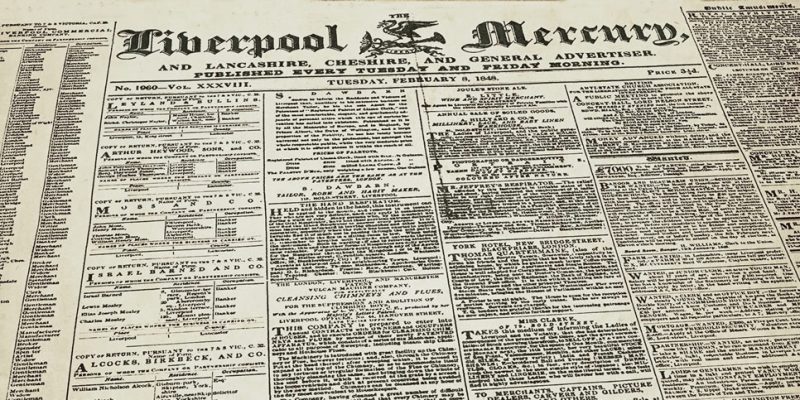
Newspapers are the true ‘fly on the wall’ documentaries which capture the everyday lives of our ancestors and communities. Not just ‘hatches, matches and despatches’ in the genealogical sense but also the drama, fun and sometimes dreadful actions of ordinary people.
Don’t just focus on national newspapers. Those from the mid nineteenth century will inevitably record the military, political and sporting events however it is the local newspapers reflecting traditional community life which can often lead to unexpected finds.
Within the broadsheets you can discover a convicted burglar, which lead to court records and ultimately transportation to Australia. A deserter from the Royal Artillery drunk and disorderly in 1877, who knew? A fatal accident in 1849 on a new the railway line shortly after it had opened – bet he didn’t see that coming, poor thing. A girl aged nine years and eight months who gave birth in 1881, too awful. You can always rely on a good wedding for naming the main participants and colour of the bridesmaid dresses. Maybe a Sunday School outing or tea party is featured, hope they all had a lovely time. Bet the Friendly Society parade was a good day out too and not forgetting the Ancient Foresters and Oddfellows with the inevitable marching bands. If there are photographs, even better as it all helps you sense the excitement and see people enjoying themselves on the annual feast day and no doubt getting into pickles pretty much like today.
Start with the National Archives to discover where the main printed and online collections are kept. Enter the name of your village into a search engine of one of the online providers and wait to be surprised, shocked and horrified with past occurrences.
Focus on the place to gain an understanding of what everyday life was like for the community and include it in your study.