Free trial Sign in
  1. The WOW Factor

    A long, long time ago, an idea was born… Name & Place. Its birth came from the lack of relevant software to manage a range of data for local history projects. It was quickly apparent that this shortfall could only be addressed by creating our own solution.

    As we explored this innovation further, it soon became apparent – the WOW moment – our solution should be extended to address a challenge faced by all local history researchers. In fact, with a small shift in our thinking, the solution evolved to encompass One-Name / Surname Studies, DNA Projects and House Histories, not by shoehorning to make them fit but offering a dedicated software solution designed exclusively with the special requirements of these researchers in mind.

    Jump forward to the launch of Name & Place at RootsTech 2020 in Utah, February 2020, and now we can share our vision to a wider audience. This has been followed with the release of version 1.1 with the CSV importer, project websites plus unique identifiers and further new features are in the pipeline…

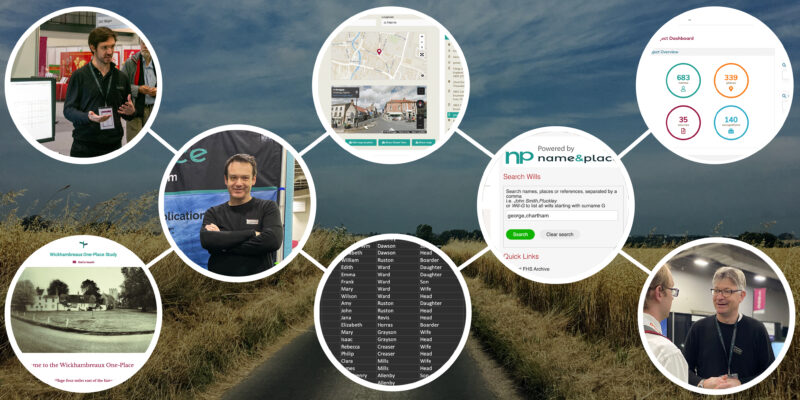
    The N&P WOWs include :

    • Cloud-based single repository for all research i.e. no more multiple spreadsheets, photos in a box etc                                                                
    • A CSV data Importer
    • Your own personal project webpage
    • An easy to read dashboard giving an overview of your project
    • Multiple uses such as names, places, war memorials, boats, graveyards to name a few
    • Suitable for both individuals or organisations
    • Digital mapping linked to Google Maps
    • Multi-type storage and displays: photos, videos, certificates, transcripts…

    Differentiators from other software

    • Added value to family history research by enabling community and house history to track societal change and produce outcomes such as occupations and mortality
    • Designed by local history researchers and genealogists who understand what a research project is and the importance of full academic sourcing
    • Management of common surnames where the link is not by family, as is seen in one-name studies
    • 3-dimensional layered database

    … to be continued; stay excited!

  2. New feature – project website

    Promoting and sharing your research online is a marvellous way of interacting with others who have a common interest in your area of study. It creates an opportunity to collaborate and share ideas about community and family history. Any interaction has value as each person recounts snippets of precious information and before you know it another mystery has been solved. Family historians continue to emphasise how little things can often become the big things and unlocks the door in your brick wall. Similarly, new contacts can contribute to the history of a property.

    Many researchers have discovered me through my website and social media presence and subsequently donated images, deeds, ration books, flags, brick stamps and old postcards. This dialogue stimulates valuable reminiscences and personal testimony which could never be found  in an archive. Without an online presence I would have missed these valuable exchanges.

    Rillington One-Place Study Website

    Banner and Introduction

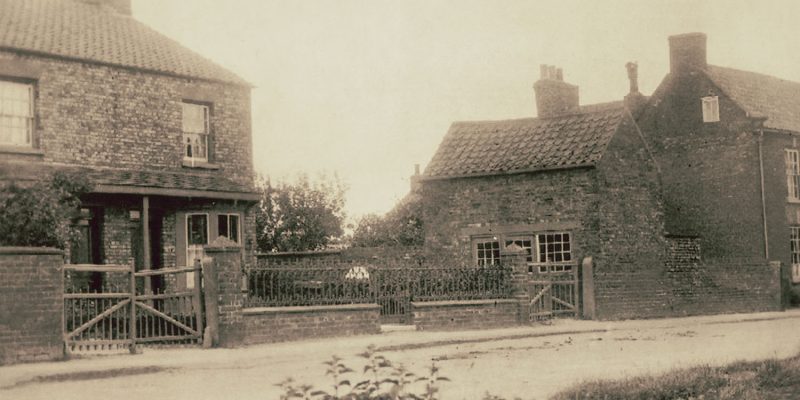
    Each Name & Place project is assigned a promotional website and domain name, together with an optional upgrade to use a dedicated address. It allows up to three text blocks, a gallery of project images and a contact form should you wish to announce yourself to any future interested researchers. It has been designed to act as a taster to reach people who are searching your project online without initially sharing too much information. Choosing to share a potted history of my one-place study of Rillington together with the types of records held along with old postcards and present day images works best for me. This approach also fits well with a one-name study and house history project. You’ll find the structure of how to do it under ‘Publish’ in the tool bar.

    Rillington One-Place Study Website

    Text and Gallery

    Rillington One-Place Study Website

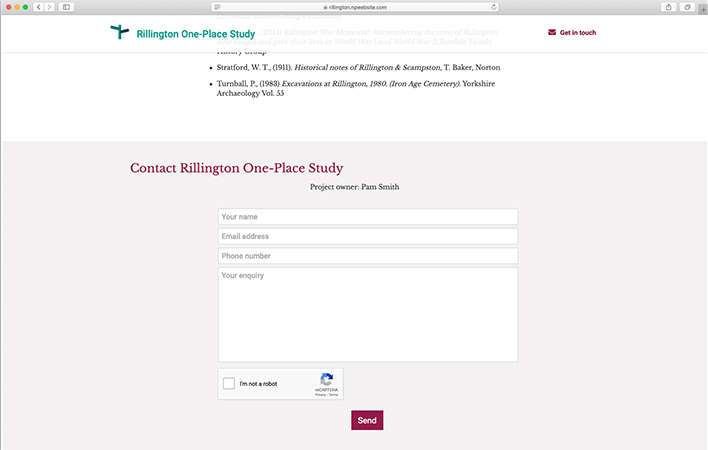
    Contact Form

    Check this website out for some ideas and inspiration to tackle your own project. https://rillington-ops.npwebsite.com The best news is that this wonderful shop window for your study is easy peasy to set up and fun to use.


  3. Bricks and Mortar

    Your Name and Place database is able to include a history of buildings and who lived in them. This is a great way to explore a community and examine the architecture of a place. The design and materials used in the construction of a building will give you many clues about the age and original use.

    Simple observations can help build up the clues:

    • Date – there may be a date-stone over the front door or up in the gable.
    • Names – house and street names are a big clue. The Crimean War 1853-1856 gave rise to many street names; Alma Street, Mafeking Terrace, Balaclava Road.
    • Mixed styles – buildings will have been modified over time and a stylish Georgian frontage may be covering up a much older house.
    • Geography – buildings will have been constructed using local bricks and raw materials creating a distinctive architectural footprint.
    • Change of use – is the current Italian restaurant a former theatre? Is the ‘Grand Designs’ residence a former nonconformist chapel? Are the riverside apartments a former mill?

    Whether the building that attracted your attention is a former manor house or a Victorian back-to-back terrace house, there are key research sources available to help you find evidence for the location and development of the property; the land and the owners and occupiers:

    • Census returns 1841-1911
    • 1939 National Identity Register
    • 1910 Valuation Office Survey
    • Trade and Street Directories
    • Wills
    • Title Deeds
    • Old photographs
    • Old postcards
    • Newspapers
    • Maps – tithe, estate and OS
    • Sale catalogues
    • Estate records
    • Rate books and tax records

    Even the most humble abodes can hold a story beyond the lath & plaster and multi-occupancy. Current houses could have been the local butcher’s shop, tailors or a private lunatic asylum. Few houses had a house number until the late nineteenth century so it is important to correctly identify a property.

    Name and Place can store and display all the information focused on a property and record the changes in ownership, tenancy and refurbishment. Now you have the opportunity to shift your outlook from a family history to a house history perspective!