Every last drop
Category: One-Place Study One-Name Study Local History Researching
Family Historians are familiar with squeezing out every possible fact from primary evidence such civil registration certificates and wills. Any extra information gleaned is a bonus and can extend a pedigree by providing, say with a birth certificate, such information as the mother’s maiden surname. Equally, a marriage certificate may identify the name of the father of the bride and groom along with witnesses and of course a death certificate should state not only who registered the death but also the cause. Finally, if you’re fortunate and can locate a will, then sometimes up to three generations can be mentioned as beneficiaries in a will as well as bequests made to favoured servants and friends.
Examination of records for a one-place study are conducted with a slightly different outlook. Whilst scrutinising a community as a whole, people can be discovered where you’d least expect. Always be on the look out to uncover the unexpected.
Instead of searching for the name of a person in the online catalogue of a local archives, diocesan record office or specialist repository, an alternative search should be focussed on the place.
A plethora of records will become apparent which may not have been considered when looking for a person:
- Board of Education returns
- Private lunatic asylums
- Ordnance survey sheets
- Lease and release
- Bargain and sale
- Friendly Society records
- Glebe terriers
… and many more.
Although the emphasis shifts from tracing ancestors to witnessing the development of a community, these records can provide evidence that places an individual in a specific time and a place which may not have been apparent from the census 1841-1911.
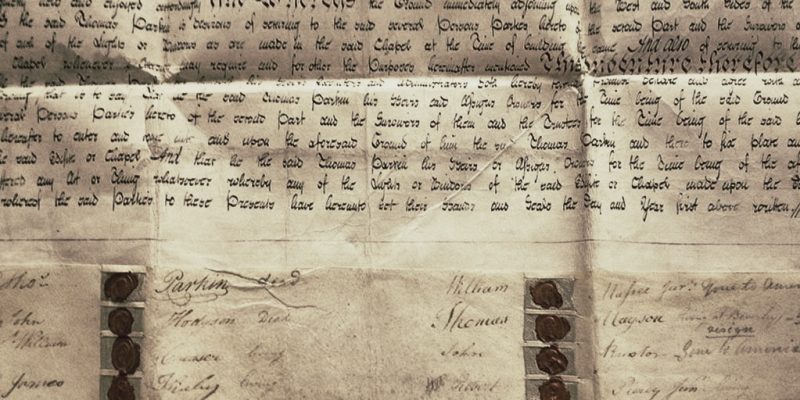
The deed in the above photograph records the parties named in the purchase of land for a Methodist chapel in 1803. The signatures of the trustees are recorded at the bottom of the page along with their seals. By the time the trustees were updated, a note explained the current status of the signatories i.e. deceased, resigned and gone to America.
By using Name & Place you can import the document image and record the details of some of the members of the Methodist congregation. You can identify the parties and who were trustees thus narrowing down the date of their death and emigration, building an holistic overview of a small section of the village, land earmarked for building and inhabitants who were nonconformists.
By encompassing all record types in its data repository, with full indexing, Name & Place enables matches to be found in more obscure documents. Using its full search capabilities, you can manually locate based on person or place names but we’re also employing intelligent matching to try to suggest possible connections you may not have noticed across all datasets.


