Free trial Sign in
  1. The WOW Factor

    A long, long time ago, an idea was born… Name & Place. Its birth came from the lack of relevant software to manage a range of data for local history projects. It was quickly apparent that this shortfall could only be addressed by creating our own solution.

    As we explored this innovation further, it soon became apparent – the WOW moment – our solution should be extended to address a challenge faced by all local history researchers. In fact, with a small shift in our thinking, the solution evolved to encompass One-Name / Surname Studies, DNA Projects and House Histories, not by shoehorning to make them fit but offering a dedicated software solution designed exclusively with the special requirements of these researchers in mind.

    Jump forward to the launch of Name & Place at RootsTech 2020 in Utah, February 2020, and now we can share our vision to a wider audience. This has been followed with the release of version 1.1 with the CSV importer, project websites plus unique identifiers and further new features are in the pipeline…

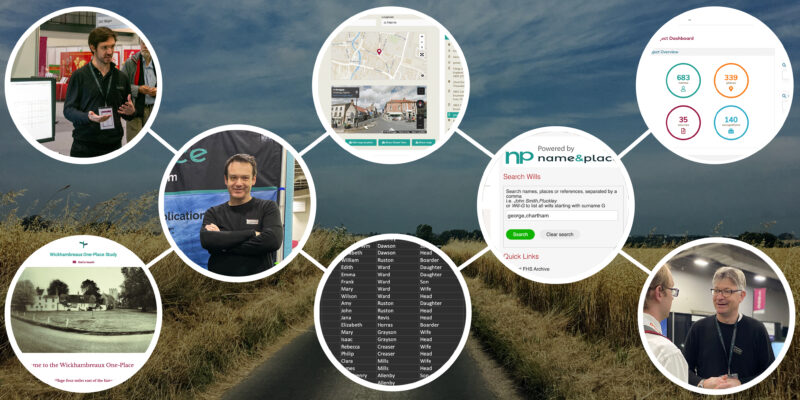
    The N&P WOWs include :

    • Cloud-based single repository for all research i.e. no more multiple spreadsheets, photos in a box etc                                                                
    • A CSV data Importer
    • Your own personal project webpage
    • An easy to read dashboard giving an overview of your project
    • Multiple uses such as names, places, war memorials, boats, graveyards to name a few
    • Suitable for both individuals or organisations
    • Digital mapping linked to Google Maps
    • Multi-type storage and displays: photos, videos, certificates, transcripts…

    Differentiators from other software

    • Added value to family history research by enabling community and house history to track societal change and produce outcomes such as occupations and mortality
    • Designed by local history researchers and genealogists who understand what a research project is and the importance of full academic sourcing
    • Management of common surnames where the link is not by family, as is seen in one-name studies
    • 3-dimensional layered database

    … to be continued; stay excited!

  2. Question time

    Rillington Railway Station

    The framework for a one-place study is based on the outcomes you would like to see – this may well change as the study progresses! There is no prescriptive way of assembling a one-place study as every place is different and your interests will be equally varied.

    Your place also needs to be viewed in a wider context as no community exists in isolation. For example, the parliamentary enclosure acts changed the rural landscape from open fields and common pastures to consolidated fields which were individually owned or rented.

    A good place to start is by asking yourself questions about your place:

    • People – Who lived in your community? Who were the principal residents? How did they shape village life? Who owned land and who rented? Who were the gentry? Were they armigerous?
    • Topography – What are the unique features of your place? Did topography affect, limit or attract developing industry? Chalk hills, river, coal seams.
    • Population – What caused an increase and/or a decrease in population? Who emigrated and immigrated and why?
    • Occupations – What were typical trades and occupations for the inhabitants? Linen, brick-making, agriculture? Did this change over time and why?
    • Poor relief – What provision was made for the poor? Was there a workhouse? Were there any Friendly Societies – Foresters, Shepherds, Druids, Gardeners, Sons of Temperance, Rechabites?
    • Housing – What were the houses like? Are there any old photographs, drawings, sketches or postcards available?
    • Nonconformity– Was your place a hotbed of nonconformity? Methodists, Quakers, Jews, Baptists, Huguenots? What did these groups bring to your place? Temperance? Sunday schools?
    • Governance – How was your place managed? Who were the members of the vestry or manorial court and what was their influence? Who were the incumbents?
    • Education – Was there a dame school or village school? Was there regular attendance? Were there any famous scholars?
    • Transport – Were there roads or canals? How did the coming of the railways affect your place? How has transport changed?
    • Crime – Who were the perpetrators and how were they punished? Did anyone get transported? How were crimes recorded?
    • Militia – Was there a local militia? If so what happened after the Militia Act in 1757?
    • Death – Were there any significant diseases? Infant mortality? Felo de se? What was life expectancy through time?

    Once you decide on your preferred outcomes, then the appropriate records and maps can be researched and recorded. What questions will you ask yourself about your one-place study? Where will your journey take you?