In the name of God Amen
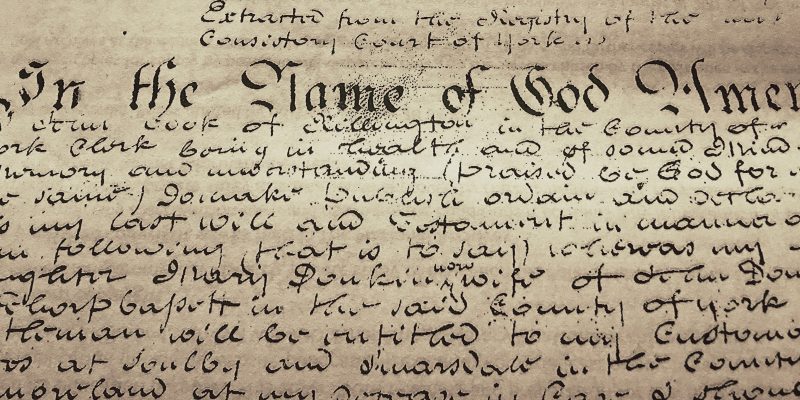
Wills proved before 1858 in the ecclesiastical courts and after 1858 in the secular Court of Probate are primary evidence for the family history and local history researcher. These name-rich sources enable the researcher to discover what and how the testator wished to bequeath to their next of kin, extended family, friends and treasured servants. Wills also identify philanthropic bequests to charities.
A great deal of detailed information can be gleaned from transfers of land and personal items. Associated documents such as inventories and accounts can give an insight into the social and economic standing of the family. Artefacts and furniture listed from within the family home can enable the researcher to see how their ancestors lived. A substantial family tree can be constructed from the wishes of the deceased often naming up to three generations of family members, together with abode and occupation. Deep emotions are often expressed about the testator’s nearest and dearest including love, hatred and frustration. Sometimes an illegitimate child is finally acknowledged. It is easy to assume that only wealthy people made a will, however it is always worth searching for the will of a tradesman or labourer.
Name & Place can help the researcher explore a will to examine and record the full impact upon each beneficiary and gain an understanding of the thoughts, feelings, wealth and status of the deceased when they were still alive.